
Download Datanyze – Predictive Sales Analytics, Market Intelligence, Free Trial
Overview
Datanyze is a cloud‑based analytics platform that turns publicly available web data into actionable sales intelligence. By crawling millions of websites, product listings, and inventory signals, the tool builds a real‑time picture of which technologies and products are gaining traction in the market. Users feed their own catalog of items into Datanyze, and the engine matches those SKUs with the external data to forecast which products are likely to see a sales surge next quarter.
The core promise is simple: give marketers and sales teams a data‑driven way to prioritize outreach, allocate inventory, and design campaigns that align with emerging demand. While the website leans heavily on buzzwords, the underlying mechanism relies on open‑source data aggregation, statistical modeling, and trend detection. For businesses that sell technology‑related hardware or software, Datanyze can act as a “sales crystal ball,” highlighting hot product categories, regional buying patterns, and competitor movements.
The platform is subscription‑based, offering a free trial that grants limited access to its dashboards and raw data exports. After the trial, pricing jumps to a premium tier, which can be a barrier for small teams but may be justified by the depth of market insight it delivers. In practice, the value you extract depends on how rigorously you integrate its predictions into your planning process, rather than expecting the tool to automatically close deals.
Key Features & Predictive Engine
What Datanyze actually does
- Web‑Scale Data Collection: Continuous crawling of e‑commerce sites, inventory trackers, and technology blogs to capture stock levels, price changes, and product releases.
- Technology Mapping: Links external signals to the specific technology categories you define (e.g., networking gear, SaaS licenses, IoT devices).
- Predictive Modeling: Uses time‑series analysis and machine‑learning algorithms to estimate future demand spikes based on historical trends.
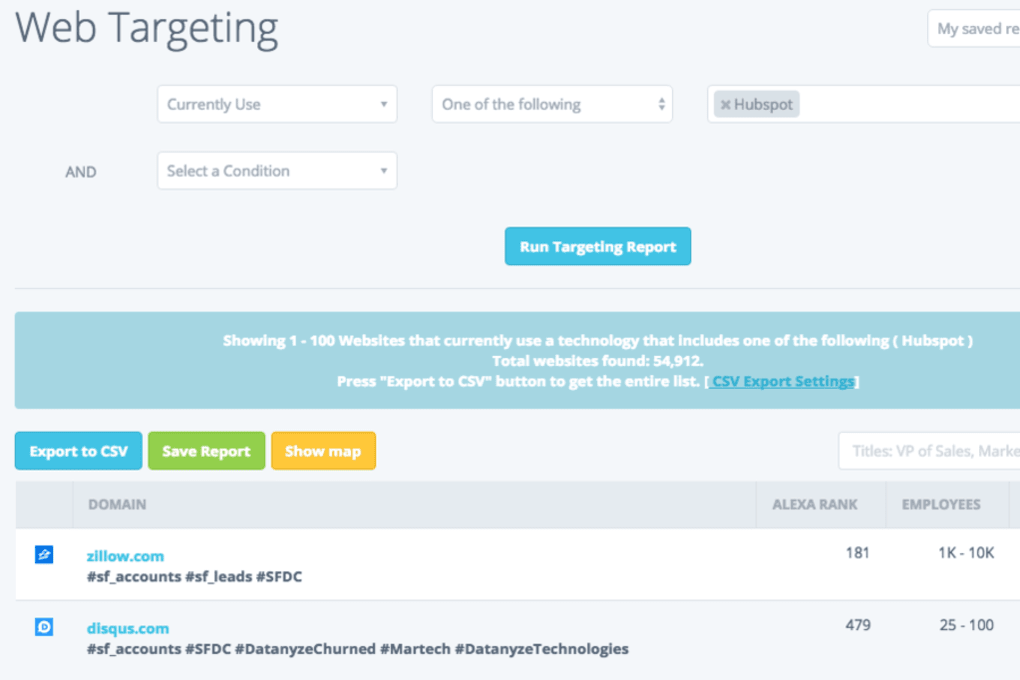
- Custom Dashboard: Drag‑and‑drop widgets let users visualize regional demand heatmaps, product‑level forecasts, and competitor activity.
- Data Export & API: Export CSV reports or pull data programmatically via RESTful API for integration with CRM or BI tools.
- Alert System: Real‑time notifications when a product’s predicted surge reaches a predefined threshold.
- Collaboration Tools: Share dashboards, annotate insights, and assign follow‑up tasks to team members directly inside the platform.
Beyond the feature list, the predictive engine is where Datanyze attempts to differentiate itself. By feeding the scraped data into a regression model that accounts for seasonality, promotional cycles, and external events (e.g., product launches, industry conferences), the system produces a confidence score for each forecast. Users can adjust model parameters—such as weighting recent trends higher than older data—to fine‑tune predictions for their unique sales cycle. The platform also offers a “What‑If” scenario builder, allowing marketers to simulate the impact of a price drop or a new marketing channel on the projected sales curve. While the math is hidden behind a user‑friendly UI, the underlying principle is straightforward: more data equals clearer signals, and clearer signals enable smarter allocation of sales resources.
One of the most compelling aspects is the ability to cross‑reference internal sales records with external buying signals. For example, if a retailer notices a spike in “stock remaining” tags for a competitor’s product, Datanyze can flag that product category as “at risk” and suggest counter‑offers or bundled promotions. This proactive stance transforms raw data into a strategic playbook, helping sales teams stay ahead of market shifts rather than reacting after the fact.
Installation, Usage & Compatibility
Getting Started – No Download Required
Datanyze is delivered as a SaaS solution, meaning there is no traditional software download or installation process. Users simply sign up on the website, verify their email, and are granted access to a secure web portal. Because it runs entirely in the cloud, the platform is inherently cross‑compatible with any modern operating system that supports a web browser—Windows 10/11, macOS Catalina and later, Linux distributions, and even mobile browsers on Android or iOS.
To begin using Datanyze, follow these steps:
- Sign Up for the Free Trial: Visit the Datanyze homepage, click “Start Free Trial,” and complete the registration form.
- Define Your Product Catalog: Upload a CSV file containing your SKU list, product names, and technology categories. The platform provides a template to ensure proper formatting.
- Configure Data Sources: Choose which external data feeds you want the engine to monitor (e.g., major e‑commerce sites, industry forums, inventory aggregators).
- Set Forecast Parameters: Adjust the prediction horizon (30‑day, 90‑day, or custom), confidence thresholds, and any weighting factors for seasonality.
- Launch the Dashboard: Once the system ingests your catalog, the dashboard populates with predictive charts, heatmaps, and alerts.
Because the service is browser‑based, updates are instantaneous—new features and bug fixes roll out automatically without requiring user intervention. For teams that need deeper integration, the Datanyze API can be called from any environment that supports HTTPS requests, making it compatible with CRM platforms like Salesforce, HubSpot, or custom ERP systems.
Supported operating systems include Windows 10/11, macOS 10.15+, Linux (any distribution with a recent Chrome/Firefox), Android 8.0+, and iOS 13+. The platform adheres to GDPR and CCPA standards, offering data encryption both at rest and in transit, which is essential for businesses handling sensitive sales data.
Overall, the lack of a local client reduces IT overhead, while the web‑based interface ensures that all team members—whether in the office or on the road—can access the same real‑time insights. The only technical requirement is a stable internet connection and a modern browser that supports HTML5 and JavaScript.
Pros, Cons & Frequently Asked Questions
Pros
- Comprehensive web‑scale data collection provides a broad market view.
- Predictive modeling helps prioritize sales efforts before demand spikes.
- Browser‑based SaaS eliminates installation headaches and ensures instant updates.
- API access enables seamless integration with existing CRM and BI tools.
- Customizable alerts and “What‑If” scenarios support proactive campaign planning.
Cons
- Subscription price is high for small businesses; free trial is limited in scope.
- Reliance on publicly available data means accuracy can vary across niche markets.
- Steep learning curve for non‑technical users when configuring model parameters.
- Limited offline capabilities; a stable internet connection is mandatory.
- Dashboard UI, while functional, can feel cluttered for first‑time users.
FAQ
Is there a truly free version of Datanyze?
Datanyze offers a 14‑day free trial that provides full access to the dashboard and API. After the trial, you must upgrade to a paid plan; there is no perpetual free tier.
Can I export the forecast data?
Yes, the platform supports CSV export of all reports and also provides a REST API for automated data pulls.
How does Datanyze ensure data privacy?
All data is encrypted in transit (TLS 1.2) and at rest (AES‑256). The service complies with GDPR and CCPA, offering data‑deletion requests upon user demand.
Is the predictive model customizable?
Users can adjust forecast horizons, confidence thresholds, and weighting factors for recent trends versus historical data, allowing a degree of customization to fit specific sales cycles.
What integrations are available out of the box?
Datanyze offers native connectors for Salesforce, HubSpot, and Microsoft Dynamics, plus a generic webhook and REST API for custom integrations.
Review Summary: Datanyze shines as a market‑intelligence engine for technology‑focused sellers, delivering actionable forecasts that can boost pipeline efficiency. The steep price and reliance on publicly scraped data keep it out of reach for very small teams, but enterprises that need a macro view of tech demand will find the investment worthwhile.
Conclusion & Call to Action
In a crowded landscape of sales‑enablement tools, Datanyze distinguishes itself by turning open‑source web data into forward‑looking insights. Its predictive algorithms, customizable dashboards, and robust API make it a strategic asset for companies that sell technology products and need to anticipate market shifts. While the platform is not a silver bullet—its effectiveness hinges on disciplined integration into your planning workflow—the value of having a data‑driven crystal ball can translate into higher win rates, better inventory management, and more focused marketing spend.
If you’re ready to move beyond gut‑feel forecasting and want a concrete, data‑backed view of upcoming tech demand, start your free trial today. Experience the heatmaps, alerts, and export capabilities firsthand, then decide if the premium subscription aligns with your revenue goals.



.png)